The Rush
At your speed≈ 9½ hrs
Pages465
Audiobook≈ 15½ hrs
Every reading time on the site updates to your pace. Page counts are an estimate, so treat the hours as a good guide, not a stopwatch.
465 pages works out to roughly 140,000 words. At an average 250 words a minute that is 9½ hrs — a weekend's reading.
No Worth-it score yet. Too new to score — fewer than 10 readers have rated it on Hardcover so far. How the score works →
How long does it take to read The Rush?
The Rush is 465 pages, or roughly 140,000 words. How long that takes depends on how fast you read:
| Your pace | Words per minute | Time to finish |
|---|---|---|
| Slow | 175 | 13½ hrs |
| Average | 250 | 9½ hrs |
| Fast | 400 | 6 hrs |
Estimated at about 300 words per page. Most adults read between 200 and 300 words a minute — set your own pace and every time on the site adjusts. Prefer to listen? At a typical narration pace of 150 words a minute the audiobook runs about 15½ hrs — an estimate from the word count, since narrators vary.
Common questions
- How long does it take to read The Rush?
- About 9½ hrs at an average reading speed of 250 words per minute. The Rush runs 465 pages, roughly 140,000 words — so at a slower 175 wpm it is nearer 13½ hrs, and at 400 wpm closer to 6 hrs.
- How many pages is The Rush?
- 465 pages, which is about 140,000 words and 9½ hrs of reading. Editions vary, and only Google Books lists a page count for it, so treat it as approximate.
- Is The Rush worth reading?
- What we can tell you for certain is the cost: 465 pages and about 9½ hrs of your time, or 6 hrs if you read quickly. Whether that is worth it depends on the hours you have.
- How long is The Rush audiobook?
- About 15½ hrs, estimated from the 140,000 words at a typical narration pace of 150 words a minute. Real editions vary by narrator, usually by well under an hour.
From the publisher
NEW YORK TIMES BESTSELLER · A New York Times Most Anticipated Nonfiction Book of 2026 · A Los Angeles Times Best Book of the Fall National Book Award winner and Pulitzer Prize finalist Nathaniel Philbrick, author of In the Heart of the Sea and Mayflower, reveals how California’s Gold Rush forged the modern United States—and lit the long…
fuse to civil war In January 1848, a carpenter spotted flecks of gold in a shallow stream at Sutter’s Mill in California, triggering the greatest voluntary migration in U.S. history, as hundreds of thousands raced west in pursuit of sudden wealth, reinvention, and power. From the feverish gold-mining camps of the Sierra Nevada mountains to the wharves and vigilance committees of San Francisco, Nathaniel Philbrick renders a combustible, all-world society: Chilean brothers reinventing themselves to outrun prejudice; Native communities navigating dispossession and violence; the merchant-showman Samuel Brannan, drawn into the center of early vigilantism; and the politicians vying for control of California’s future—the ambitious Free-Soil political boss David Broderick, who squared off against William Gwin, the Southern power broker intent on tilting the state toward slavery and the Confederacy. In The Rush, Nathaniel Philbrick transforms the Gold Rush from a tale of sudden riches into the origin story of America’s modern contradictions—capital consolidated at dizzying speed, democracy in thrall to private power, xenophobia weaponized in the name of liberty—and a stubborn belief in the American experiment that refuses to die. This is the story of a nation tearing at the seams and a republic tested by its own ideals. Not until ayear after the outbreak of the Civil War, when President Lincoln signed legislation that would unite the nation east to west by building a transcontinental railroad, was California’s loyalty secured. Philbrick follows the gold as it moves from riverbed to countinghouse to the halls of power, revealing how vigilantism hardened into law and how debates over slavery in the West tipped the balance in Washington. The result is a clear, human story of how a scramble for wealth reshaped ideas of freedom, labor, and belonging—and how California's rise helped push a fractured nation toward war. The Rush is alive with characters whose choices still reverberate: a searing, panoramic epic that captures both the fury and the promise of America.
Readers also loved
528 pages · not widely rated yet
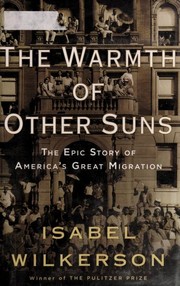
622 pages · 4.47★ on Hardcover
1458 pages · 4.23★ on Hardcover