They Stole a City
At your speed≈ 10½ hrs
Pages529
Audiobook≈ 17½ hrs
529 pages works out to roughly 159,000 words. At an average 250 words a minute that is 10½ hrs — about a week of evenings.
How long does it take to read They Stole a City?
They Stole a City is 529 pages, or roughly 159,000 words. How long that takes depends on how fast you read:
| Your pace | Words per minute | Time to finish |
|---|---|---|
| Slow | 175 | 15 hrs |
| Average | 250 | 10½ hrs |
| Fast | 400 | 6½ hrs |
Estimated at about 300 words per page. Most adults read between 200 and 300 words a minute — use the reading-speed control to set your own pace and every time on the site adjusts.
Every reading time on the site updates to your pace. Page counts are an estimate, so treat the hours as a good guide, not a stopwatch.
Common questions
- How long does it take to read They Stole a City?
- About 10½ hrs at an average reading speed of 250 words per minute. They Stole a City runs 529 pages, roughly 159,000 words — so at a slower 175 wpm it is nearer 15 hrs, and at 400 wpm closer to 6½ hrs.
- How many pages is They Stole a City?
- 529 pages, which is about 159,000 words and 10½ hrs of reading. Editions vary, so we take the figure two of our three sources agree on.
- Is They Stole a City worth reading?
- What we can tell you for certain is the cost: 529 pages and about 10½ hrs of your time, or 6½ hrs if you read quickly. Whether that is worth it depends on the hours you have.
- How long is the They Stole a City audiobook?
- About 17½ hrs, estimated from the 159,000 words at a typical narration pace of 150 words a minute. Real editions vary by narrator, usually by well under an hour.
From the publisher
“They Stole A City is a powerful new book... Collins shows how the massacre couldn't be contained to its particular time period... its effects continued to reverberate across generations.” —Jennifer Szalai, The New York Times In this ambitious and groundbreaking history, Lauren Collins weaves together stories of four Wilmington, North…
Carolina, families over 125 years to create a full accounting of the long-term effects of the 1898 white supremacist massacre and coup and its critical role in subverting American democracy After the Civil War, Reconstruction ushered in an era of political equality and economic opportunity for Black people, and it lasted longer in Wilmington than almost anywhere else. In 1898, Wilmington was a bastion of Black success: Black cultural life flourished, while a thriving Black middle class brimmed with lawyers, educators, and elected officials. The city became a symbol of Black hope—only for all of it to come to a violent end on November 10, 1898. In this epic, multigenerational narrative, Lauren Collins traces the fates of four Wilmington families: the Howes, the Halseys, the Moores, and the Bellamy/MacRaes, all of whom were present on the day when a mob of white supremacists launched a murderous coup to “take the city.” After issuing a “White Declaration of Independence,” white men gunned down scores of Black men, chasing their families into hiding. Then they marched to city hall, where they overthrew the democratically elected, multiracial local government at gunpoint in what is thought to be the only successful coup d’état on American soil. No one knows exactly how many Black citizens they murdered—surely dozens, likely hundreds—while driving thousands of survivors and their white allies out of town. Folklore among both Black and white Wilmingtonians holds that the Cape Fear River ran red. While the effects of this episode of racial terrorism would ricochet through the next century of our nation’s history, no one was ever prosecuted or punished, and many of the details have been largely—and deliberately—forgotten. In collaboration with living descendants of Black and white families, Collins seeks to create a more complete understanding of 1898 than can be drawn solely from the archives. She follows these four families and their descendants through the eras of segregation and Jim Crow, the Great Migration, the Civil Rights movement, and school desegregation, all the way up to the Black Lives Matter and racial justice protests in 2020, emphasizing the lasting and consequential effects of 1898 on the city and people of Wilmington. Weaving together each generation’s reckoning with their past and how it has imprinted on their present, They Stole a City is an ambitious and revelatory examination of American racial terror as it has played out in one Southern city, written in the conviction that the story of the 1898 Wilmington massacre and coup is, in fact, a story about America in 2025.
Readers also loved
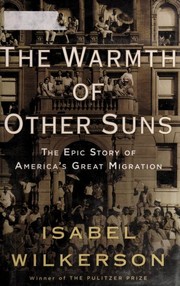
622 pages · 4.45★ on Hardcover
226 pages · not widely rated yet

362 pages · 3.90★ on Hardcover